What happens when you cut the GPU count in half?

A Memstak equipped 4 GPU cluster doesn't just match a standard 8 GPU configuration. In inference workloads, it wins outright.

By cutting the GPU count in half and augmenting with Memstak's Specialty Memory, the performance profile shifts

Feature

Peak Throughput

Latency (Time to First Token)

Power Consumption

Model Capacity

Traditional 8 GPU

High (for giant batches)

~25ms

~10.2 kW

1.1 TB

4-GPU with

Ultra-High (for real-time)

~5ms

~5.1 kW

1.2 TB

Winner

4-GPU

4-GPU

4-GPU

4-GPU

Feature

Peak Throughput

Latency (Time to First Token)

Power Consumption

Model Capacity

Traditional 8-GPU

High (for giant batches)

~25ms

~10.2 kW

1.1 TB

4 GPU "Super H200" Cluster

Ultra-High (for real-time)

~5ms

~5.1 kW

1.2 TB

Feature

Peak Throughput

Latency (Time to First Token)

Power Consumption

Model Capacity

Traditional 8 GPU

High (for giant batches)

~25ms

~10.2 kW

1.1 TB

4-GPU with

Ultra-High (for real-time)

~5ms

~5.1 kW

1.2 TB

Winner

4-GPU

4-GPU

4-GPU

4-GPU

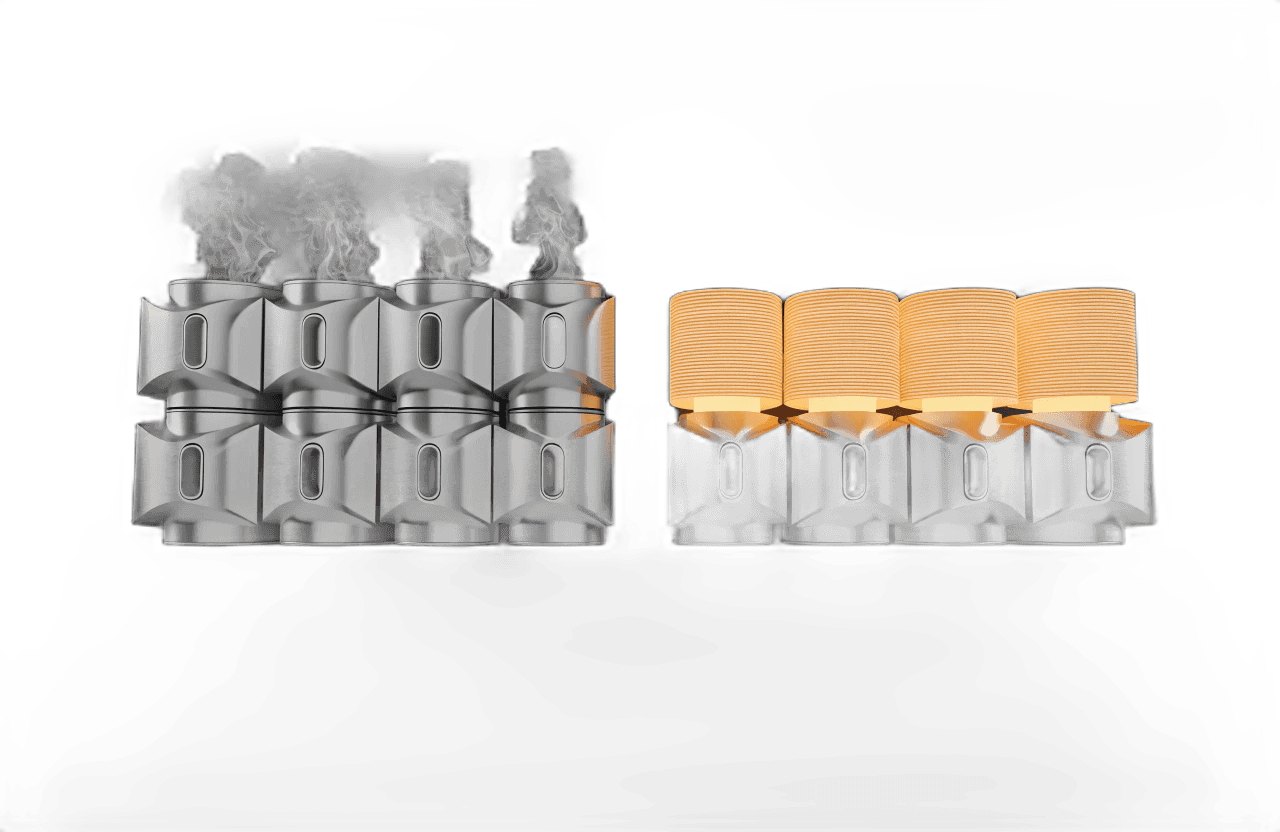
The 4-GPU cluster with Memstak is superior in almost every metric. It provides lower latencyhigher effective throughput, and uses 50% less power. The only scenario where the 8-GPU cluster might win is in massive "Offline Batching" where latency doesn't matter and you can saturate all 8 GPUs with millions of simultaneous requests.

Where Memstak Makes the Biggest Difference
Generative AI Inference

When an entire model fits within proximity stacked memory, the compute pipeline never stalls.

Real time AI

Code generation

Document analysis 

Cloud inference platforms
AI Model Training

Hiding memory latency keeps Tensor Cores computing instead of waiting, yielding 1.5 to 2x faster training.

Pre-training

Fine tuning & RLHF

Continual learning

Budget constrained research
Total Cost of Ownership

Half the GPUs, comparable throughput, dramatically lower operating costs

Hyperscale cloud

Enterprise clusters

Colocation

Edge deployments

When memory cost drops drastically and performance increases by 10x, the cost to generate a single token drops exponentially.
That's what makes AI affordable at scale.

When memory cost drops drastically and performance increases by 10x, the cost to generate a single token drops exponentially.
That's what makes AI affordable at scale.

When memory cost drops drastically and performance increases by 10x, the cost to generate a single token drops exponentially.
That's what makes AI affordable at scale.

Economics broken down

Memory Cost Savings

HBM and CoWoS packaging consume 60 to 80% of GPU bill of materials in leading accelerators. Memstak projects cost reduction by a factor of 5-10. At hyperscale, aggregate memory savings alone reach hundreds of millions per deployment.
Power Savings

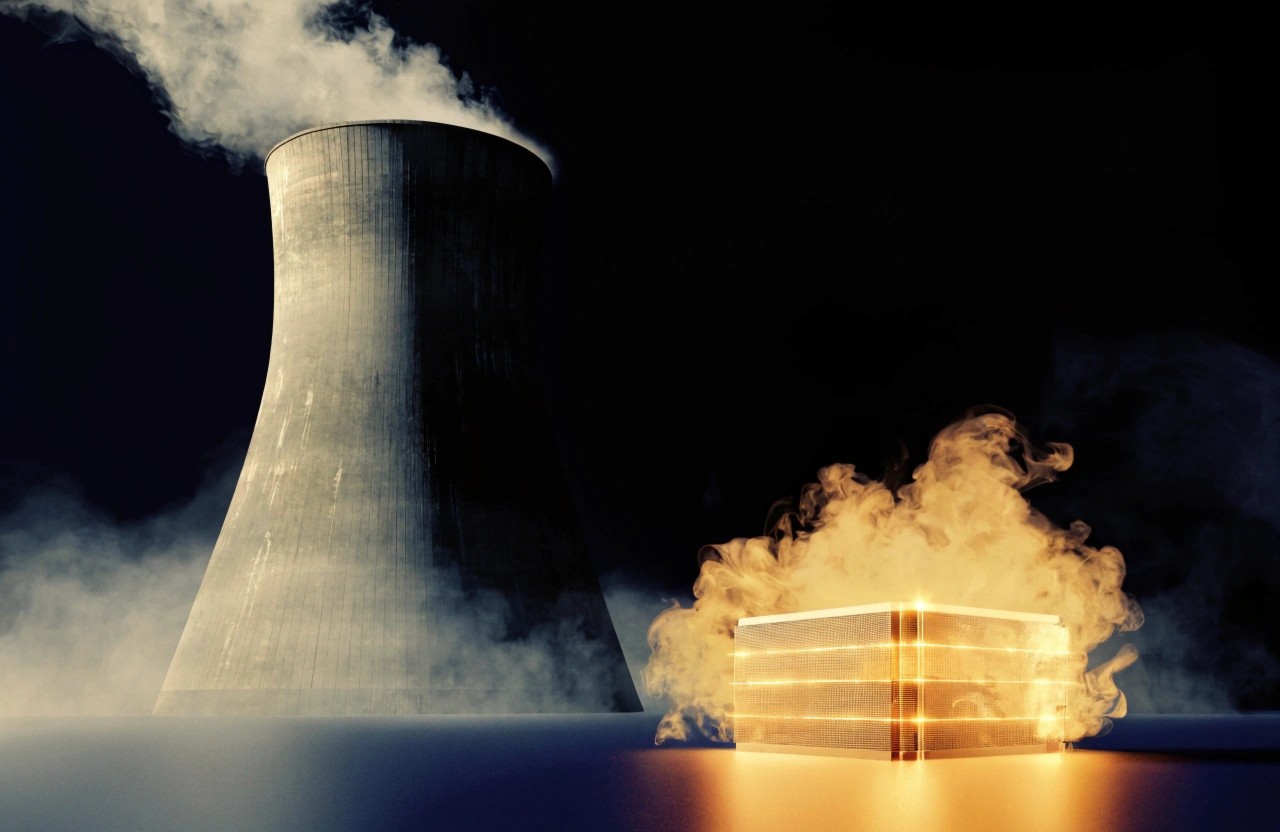
US data centers draw ~41 GW today, up 150% in five years. Memstak equipped clusters consume an order of magnitude less energy per memory access, and a 4 GPU Memstak cluster matches or exceeds an 8 GPU standard configuration, halving power, cooling, and infrastructure costs.

By 2030, 50-90 new nuclear plants may be needed just to power AI data centers. Memstak's efficiency gains could significantly reduce that number
 

Can We Cut AI Data Center Cost in Half?

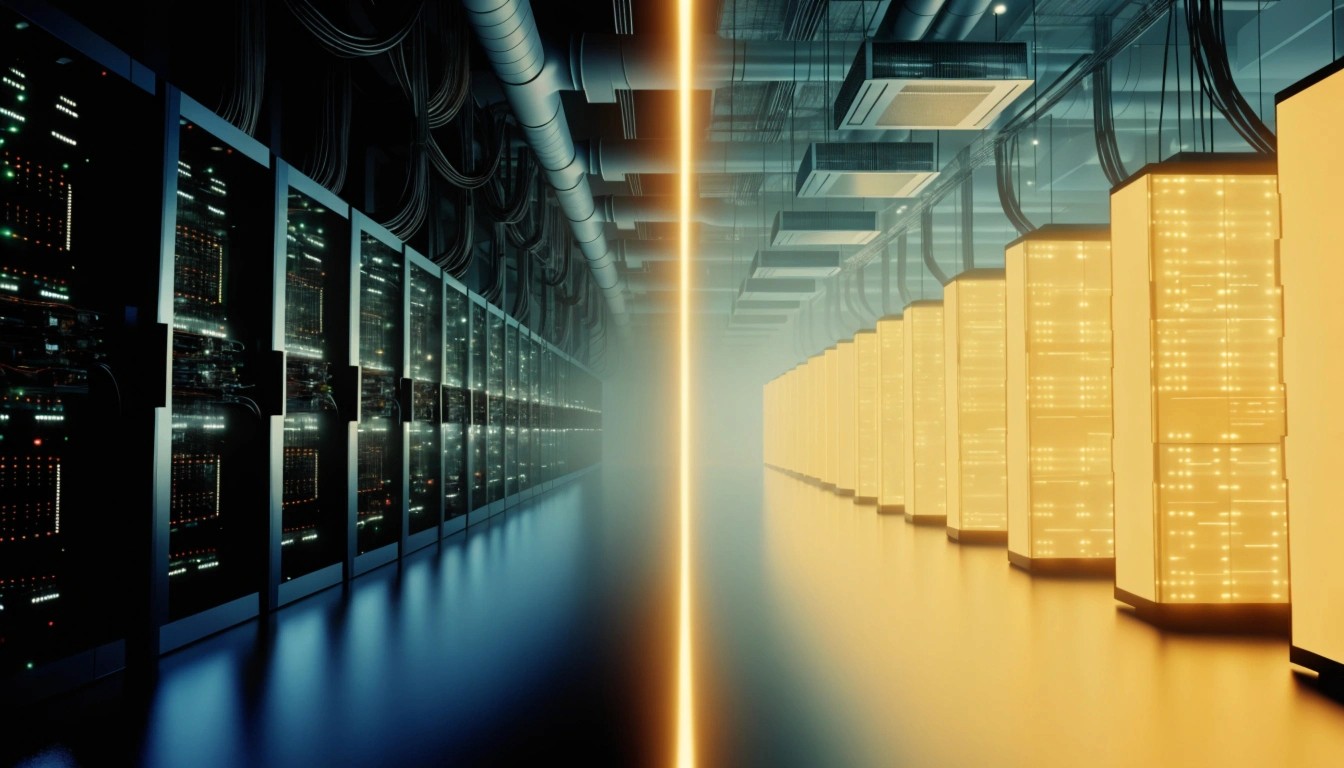
The industry is projected to spend $700 billion on AI infrastructure by 2026. The single largest line item in that spend is memory and its associated thermal management. When you reduce memory BOM by an order of magnitude, cut power consumption per access, and halve the GPU count required for equivalent throughput, the total cost implications are transformative.

It would be great if AI could be more affordable for everyone. That ambition drives everything we build.

How Memstak Compares to HBM

Access Latency

Bandwidth

Cost per GB

Thermal Output

Supply

Integration

Scalability

HBM

Standard

High

Premium (60 to 80% of CPU BOM)

Significant

Constrained through 2026+

Requires CoWoS/Interposer

Limited by stack height/CoWoS

10 to 15x faster

Comparable or enhanced

A fraction of HBM costs

Minor

Alternative supply path

Fits existing package designs

Highly scalable

HBM

Standard

High

Premium (60 to 80% of CPU BOM)

Significant

Constrained through 2026+

Requires CoWoS/Interposer

Limited by stack height/CoWoS

Access Latency

Bandwidth

Cost per GB

Thermal Output

Supply

Integration

Scalability

10 to 15x faster

Comparable or enhanced

A fraction of HBM costs

Minor

Alternative supply path

Fits existing package designs

Highly scalable

Access Latency

Bandwidth

Cost per GB

Thermal Output

Supply

Integration

Scalability

HBM

Standard

High

Premium (60 to 80% of CPU BOM)

Significant

Constrained through 2026+

Requires CoWoS/Interposer

Limited by stack height/CoWoS

10 to 15x faster

Comparable or enhanced

A fraction of HBM costs

Minor

Alternative supply path

Fits existing package designs

Highly scalable

Discover Your Next Gen Performance Multiplier

Explore how our proprietary stacked cache can improve your throughput at a lower cost.

Whether you are evaluating memory alternatives for a next generation accelerator or optimizing an existing deployment, our engineering team is available for technical discussions and detailed performance projections tailored to your workload.

Contact us

Advancing the architecture of AI
©2026 Memstak Inc. All rights reserved.
Advancing the architecture of AI
©2026 Memstak Inc. All rights reserved.